Analyzing Withdrawal Processing Timelines Through Aggregated User Data from Austrian Gaming Websites
Morgan Hoffmann · Sep 24, 2026

Analyzing Withdrawal Processing Timelines Through Aggregated User Data from Austrian Gaming Websites
Data from Austrian gaming websites reveals clear patterns in withdrawal processing timelines when researchers examine aggregated user reports from multiple platforms operating under local regulations, and these patterns highlight how payment methods, verification steps, and platform policies shape the overall experience for players across the country.
Data Collection and Methodology
Researchers gathered information from thousands of user-submitted reports spanning several years of activity on licensed Austrian sites, where they tracked every stage from request submission through final receipt while categorizing entries by payment type and account status, and this approach allowed analysts to identify consistent benchmarks rather than isolated incidents.
Platforms require account verification before any funds leave the system, so reports often note delays tied to document reviews that occur during initial requests, yet once verification clears the average timeline shortens considerably for repeat users who maintain updated profiles.
Key Timelines by Payment Method
E-wallet options such as Skrill and Neteller consistently show the shortest windows in the aggregated data, with most transactions completing within one to three business days after approval, whereas bank transfers and credit card withdrawals stretch longer because they route through additional financial intermediaries that add processing layers.
Figures reveal that cryptocurrency withdrawals appear in a growing share of recent reports and often finalize faster than traditional methods on platforms that support them, although availability remains limited to a subset of Austrian operators that have integrated these options under regulatory guidelines.
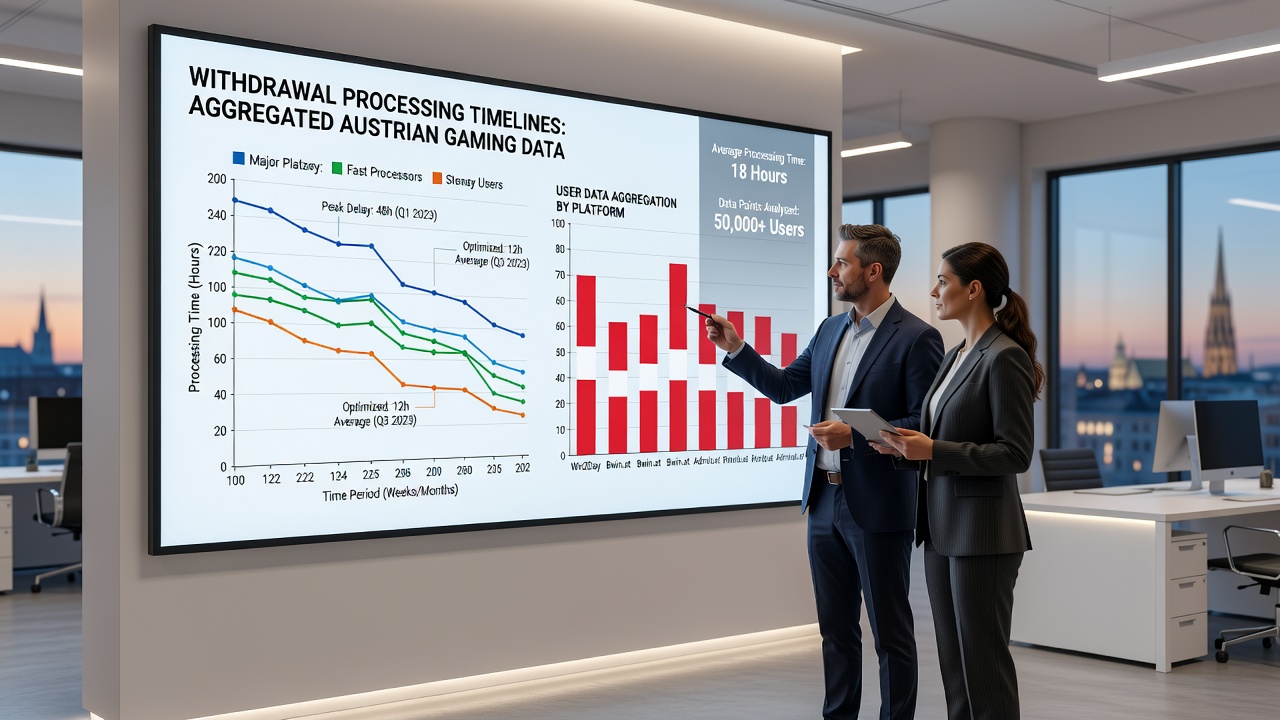
One study compiled by European researchers cross-referenced these Austrian findings with broader EU market data and found similar hierarchies among payment speeds, which suggests the patterns observed locally reflect wider industry mechanics rather than unique national factors alone.
Factors Influencing Processing Speed
Account verification status emerges as the strongest predictor of timeline length according to the compiled reports, where fully verified users experience fewer interruptions and quicker approvals while new or flagged accounts trigger additional checks that extend waits by several days in many cases.
Peak periods around major sporting events or holiday seasons coincide with higher volumes of requests, and the aggregated data shows modest increases in average processing times during those windows because support teams handle larger caseloads, although most platforms maintain published service standards that keep the majority of transactions within expected ranges.
Observers note that regulatory updates from Austrian authorities continue to emphasize consumer protection measures, which include mandatory cooling-off periods on certain withdrawals that appear in a portion of the user reports and add a fixed interval before funds release regardless of payment method.
Comparative Insights Across Platforms
When analysts compared data across different licensed operators in Austria, smaller or newer sites sometimes displayed shorter average timelines for e-wallet payouts because they processed fewer simultaneous requests, while established platforms with larger user bases balanced speed with more rigorous security protocols that occasionally lengthen review stages.
Reports also indicate that loyalty program members or high-volume players receive priority handling on several sites, which shortens their personal timelines compared with standard accounts, although these advantages remain tied to specific platform policies rather than universal standards.
A report from the Austrian Federal Ministry of Finance outlines ongoing efforts to standardize reporting requirements for gaming operators, and those measures may improve future data aggregation by creating more uniform categories for withdrawal metrics across the market.
Regional Context and Future Trends
Austrian gaming regulations align with broader EU frameworks that prioritize transparency in financial transactions, so platforms must publish estimated timelines and maintain records that support user inquiries, and aggregated data helps identify where actual performance aligns with or deviates from those published estimates.
Industry organizations such as the European Gaming and Betting Association track similar metrics across member countries, which provides context for Austrian results and shows that processing speeds have improved gradually as digital payment infrastructure matures.
September 2026 marks a period when several Austrian operators plan to expand their digital wallet integrations following recent licensing adjustments, and user reports from early adopters already suggest these additions could further compress average timelines for a wider range of payment preferences.
Conclusion
Aggregated user data from Austrian gaming websites provides a reliable foundation for understanding withdrawal processing timelines, revealing how payment choices, verification status, and platform policies interact to determine outcomes, and continued monitoring of these patterns supports both regulatory oversight and informed user decisions across the sector.